About Henry Ostrom
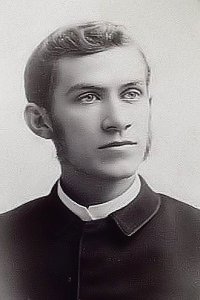
Henry Egerton Foster Ostrom (1862–1941) was a Canadian-born evangelist, author, and educator who became a prominent figure in the American Methodist and interdenominational revival movements. The son of a Canadian barrister and member of Parliament, Ostrom originally worked as a schoolteacher before committing himself to the ministry in 1880. After migrating to the United States in the 1890s, he began his American mission by preaching to lumberjacks in the north woods of Wisconsin. This rugged start transitioned into a distinguished career as a Methodist pastor in Milwaukee and Greencastle, Indiana, and eventually led to a 25-year career as a traveling evangelist alongside luminaries like J. Wilbur Chapman.
Ostrom was widely regarded as a "teacher of teachers," a reputation that led to a 20-year association with the Moody Bible Institute on its extension staff. His speaking style was noted for being both modest and colorful, often focusing on the imminent return of Christ. He was a staple at the famous Winona Lake conferences in Indiana, where he shared his deep biblical insights with large interdenominational crowds. His intellectual output was significant, spanning five books that covered topics from the "Law of Prayer" to the role of the Jewish people in Christian theology.
In the world of hymnody, Ostrom is most famous for the phrase and song "The Crowning Day." He often ended his sermons with the expectant reminder, "This may be the crowning day!" which inspired the lyrics for his most popular hymn. Interestingly, Ostrom was so humble that he often wrote under the pseudonym George Walker Whitcomb. He did this specifically so he could lead his own songs in evangelistic meetings without drawing attention to himself as the author, ensuring the focus remained on the message rather than the man.
Ostrom’s life was defined by tireless service; he died of a cerebral hemorrhage in 1941 shortly after returning to his home in Greencastle. He had just completed a grueling speaking engagement in Des Moines, Iowa, where he had preached three sermons a day for three consecutive days. His legacy is one of self-effacing devotion and a constant, hopeful gaze toward the "crowning day" of his faith.