About Henry Ware
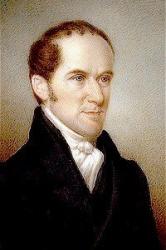
Henry Ware (1794–1843) was a central figure in American Unitarianism, distinguished as a pastor, educator, and a key architect of the liturgical identity of his denomination. Born in Hingham, Massachusetts, to a father who was a prominent theologian and Harvard professor, Ware followed a predictable yet brilliant academic path through Harvard College. In 1817, he was ordained as the pastor of the Second Church in Boston, where he became one of the city's most influential voices. His health eventually faltered under the weight of his duties, leading him to appoint a young Ralph Waldo Emerson as his co-pastor in 1829.
Ware’s influence moved from the pulpit to the classroom when he was appointed Professor of Pulpit Eloquence and Pastoral Care at the Harvard Divinity School. He was a "teacher of ministers," shaping the homiletical style and pastoral sensibilities of a generation of New England clergy. His literary output was immense, ranging from theological treatises to the editorship of the Christian Examiner. However, it was his hymns that provided the emotional and spiritual heartbeat of the Unitarian movement, noted for their "more than usual excellence" and refined poetic structure.
His hymns were often written for specific, momentous occasions in the life of the early American republic and the church. He composed "Like Israel's hosts to exile driven" for the centennial of the Boston Thursday Lecture, creating what many considered a "quasi-national hymn" celebrating the Pilgrim Fathers. For the ordination of the famed historian Jared Sparks, he wrote "Great God, the followers of Thy Son," and his Easter hymn "Lift your glad voices in triumph on high" (1817) became a vibrant staple of holiday worship across various denominations.
Ware was also deeply attuned to the social issues of his day. His final composition in verse, "Oppression shall not always reign" (1843), was a powerful anti-slavery hymn that reflected the growing abolitionist sentiment within his circle. Whether writing about the "gentle chastisement" of sickness or the dedication of a new "temple," Ware’s hymns bridged the gap between the intellectual rigor of Unitarian theology and the universal need for prayerful expression. He died in 1843, respected as a man whose life and lyrics were characterized by dignity, eloquence, and a profound sense of civic and spiritual duty.