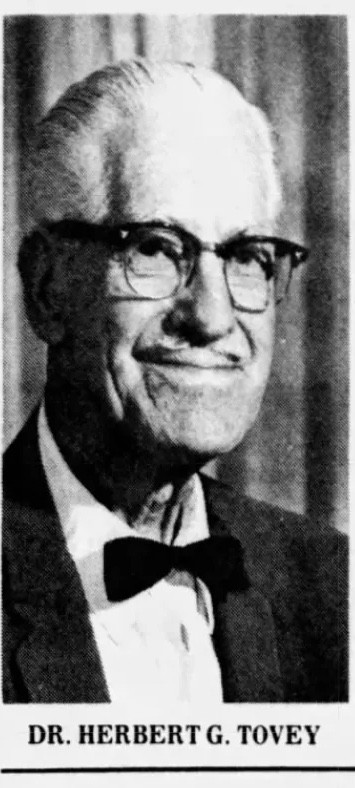
About Herbert G. Tovey
Herbert George Tovey (1888–1972) was a significant figure in 20th-century American evangelical music, serving as a bridge between traditional hymnody and the emerging "chorus" style of the mid-century revival movements. Born in England and later migrating to the United States, Tovey became a cornerstone of the music department at the Biola University (then the Bible Institute of Los Angeles). His career was dedicated to training church musicians and directors, emphasizing that music was not merely an aesthetic addition to worship but a vital tool for evangelism and soul-winning.
Tovey was a prolific writer and composer, with over 100 texts credited to his name. His work is characterized by a "militant" and urgent spiritual tone, often using metaphors of warfare, armor, and active service. This is evident in titles like "Be prepared with gospel armor shining" and "Forward, Forward, Forward with Christ." He believed strongly in the "ministry of the song," and his most enduring contribution to the hymnal is the fervent prayer "Give me a passion for souls, dear Lord." This hymn, which appears in dozens of collections, became a theme song for missionary conferences and evangelistic training schools.
In addition to his focus on missions, Tovey was a staunch defender of the authority of the Bible. Several of his hymns, such as "A wonderful book is the Word of God" and "God’s word is wonderful, perfect and true," highlight the fundamentalist and evangelical commitment to scripture that defined the institutions where he taught. He was also known for his "grand" and optimistic outlook on the Christian life, popularized in the chorus "Isn't it grand to be a Christian," which became a favorite in youth rallies and summer camps for its infectious joy and simple, rhythmic melody.
Throughout his long tenure at Biola and his involvement with the Christian and Missionary Alliance, Tovey influenced thousands of students who went on to lead music in churches around the world. He viewed the songwriter as a "witness," and his lyrics often took the form of personal testimony, such as in "I've been lifted from the mire of sin and shame." He died in 1972, leaving behind a legacy of music that prioritized the "call of the Master" and the urgent need to share the gospel "over hill and dale."