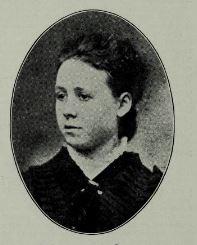
About Ida M. Budd
Ida M. Budd (1859–1959) was a beloved Michigan-based poet and hymn writer known for her gentle, nature-focused imagery and her particular gift for reaching children. Born in the rugged environment of a log cabin in Saginaw County, she spent her life in the Midwest, where the beauty of the natural world and a deep love for literature shaped her creative voice. A precocious talent, she earned her teaching certificate at the age of fifteen, a testament to her intellectual discipline and her commitment to the education of the next generation.
The Teacher-Poet
Budd’s career as a writer began in earnest in 1881 with the publication of her first poem. Because of her background in the classroom, she possessed a keen understanding of the "child’s mind"—what captured their imagination and what truths they could carry with them. This made her a sought-after contributor to the Sunday School publications of the late 19th and early 20th centuries. Her work was featured prominently by Charles H. Gabriel and the Rodeheaver Company, who valued her ability to distill complex spiritual concepts into simple, rhythmic verses.
Themes of Nature and Grace
Deeply influenced by her upbringing in the Michigan countryside, Budd often used "parables of nature" in her hymns. She saw the divine hand in the changing seasons, the growth of flowers, and the behavior of animals. Her hymns were characterized by:
-
Simplicity and Clarity: Writing specifically for young voices, her lyrics avoided dense theological jargon in favor of direct, heartfelt expression.
-
Nature as a Mirror: Her poems frequently used the beauty of the world to illustrate the "beauty of holiness."
-
Nurturing Faith: Much of her work focused on the idea of the "tender plant" of faith being cultivated through kindness and divine love.
A Century of Life
Budd lived an extraordinary span of time, passing away in 1959 at the age of 100. This longevity allowed her to see her early Victorian-style poems transition into the era of modern gospel music. While many of the "gospel songs" of her era were designed for high-energy revivals, Budd’s work remained consistently focused on the "quiet hour"—the devotional life of the home and the Sunday School classroom. She was remembered by her contemporaries as a woman of profound literary taste and a "singer" whose songs helped a century of children find their way toward faith.
Notable Contributions
-
Sunday School Hymnody: A prolific writer of primary and junior-level hymns used in Baptist and Methodist collections.
-
Poetry for Children: Published widely in religious periodicals, focusing on moral character and the wonders of creation.
-
Collaboration with Gabriel: Her lyrics were frequently set to music by Charles H. Gabriel, the most influential gospel composer of the early 1900s.