About Ira B. Wilson
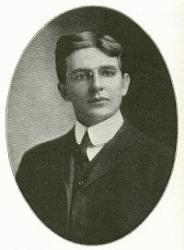
Ira Bishop Wilson (1880–1950) was a powerhouse of early 20th-century sacred music, serving as one of the most influential composers and editors for the Lorenz Publishing Company. Born in Bedford, Iowa, Wilson was a musical prodigy who learned violin and organ from his sister before refining his skills at the Moody Bible Institute in Chicago around 1902. His career was defined by his move to Dayton, Ohio, in 1905, where he spent decades shaping the sound of American choral and congregational music.
Wilson was the primary architect behind much of the "Lorenz sound," which specialized in providing accessible, melodic music for average church choirs. As the editor-in-chief of The Volunteer Choir, he understood that not every congregation had a professional ensemble at its disposal. He specialized in writing anthems and cantatas that were musically satisfying yet manageable for amateur singers, helping to standardize the "easy anthem" style that became a staple of Protestant worship across the United States.
While Wilson was a prolific composer of music—often utilizing the pseudonym Fred B. Holton to manage his vast output—he is best known for composing the tune to the world-famous gospel song "Make Me a Blessing." Published in 1924, the melody perfectly captured the era's focus on practical, outward-facing faith and became a global anthem of Christian service. His work appeared constantly in major periodicals like The Choir Leader and The Choir Herald, and he collaborated extensively with Edmund Lorenz on influential collections such as His Worthy Praise (1915).
Wilson’s output was staggering, covering everything from complex choral arrangements to simple songs for children like "Jesus Wants Us to Help" and nature-themed pieces like "What Do the Flowers Say?" He was particularly adept at seasonal music, composing enduring Christmas works such as "O Star of Matchless Splendor" and "Night of Nights." He spent his final years in Los Angeles, California, passing away in 1950 and leaving behind a legacy as the man who brought professional musical standards to the "volunteer" singers of the American church.