About Ira F. Stanphill
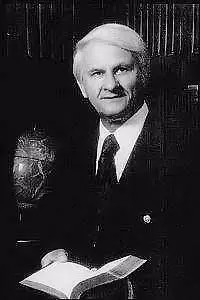
Ira Forest Stanphill (1920–1993) was a premier songwriter of the mid-20th century Assemblies of God and the broader Pentecostal movement. Born in Bellview, New Mexico, Stanphill was a musical prodigy who began playing the piano, organ, and ukulele at a young age. By the time he was ten, he was performing in revivals, and by seventeen, he was traveling as an evangelistic singer and musician. His career was defined by his ability to capture deep personal struggle and triumphant faith within the structure of a catchy, emotive gospel song.
Stanphill’s most enduring work, "I Don't Know About Tomorrow," was born out of a period of intense personal heartbreak and domestic crisis during the early 1950s. The hymn’s vulnerable opening line, "I don't know about tomorrow, I just live from day to day," resonated with a post-war generation seeking spiritual stability in an uncertain world. It has since become a global standard, translated into dozens of languages, including Chinese and Arabic. His lyrics often focused on the "lonely road" and the "heavy burden," always resolving in the sufficiency of divine grace.
Another of his monumental hits is the Southern Gospel classic "Mansion Over the Hilltop." Written during a time when Stanphill was struggling financially, the song was inspired by a conversation with a wealthy woman who felt her earthly mansion was nothing compared to what awaited her in heaven. The resulting text, "I’m satisfied with just a cottage below," became an anthem for the working-class faithful, emphasizing eternal hope over temporal wealth. This song, along with "Happiness is to Know the Savior" and "God Can Do Anything," established Stanphill as a master of the "sing-along" gospel chorus.
Throughout his life, Stanphill served as a pastor and music director in various churches, including large congregations in Texas, Pennsylvania, and Florida. His contribution to the church was recognized by his induction into the Gospel Music Hall of Fame in 1981. He was a prolific author of over 400 songs, many of which dealt with themes of healing and restoration, such as "He Washed My Eyes with Tears." He died in 1993, leaving behind a legacy as a songwriter who was not afraid to put his own tears into his music so that others might see more clearly.