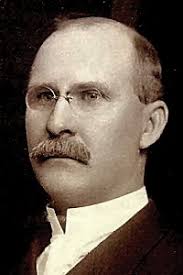
About J. B. Mackay
James Bruce (J. B.) Mackay (1861–1940) was a prolific American gospel song writer and minister whose work flourished during the golden age of the Sunday School and revival movements. A versatile contributor to the major music publishers of his day, Mackay was particularly associated with the Hall-Mack Company and the works of Adam Geibel and C. Austin Miles. His career was characterized by a deep commitment to evangelism through music, and he produced over eighty documented hymn texts that emphasized the joy of the Christian walk and the urgent need for spiritual labor.
Mackay’s writing often utilized the "invitation" and "testimony" styles common in late 19th-century revivalism. One of his most enduring themes was the call to active service, as seen in hymns like "Are you sitting idle, while there's work to do?" and "Heart and hand for Jesus; marching on." These songs were designed with rhythmic, energetic melodies to motivate congregational participation and youth engagement. His ability to craft relatable imagery is further seen in "Have you toiled all night near the shore in vain," which draws on the biblical narrative of the weary fishermen to offer hope to those struggling in their personal faith journeys.
In addition to his focus on service, Mackay wrote extensively about the transformative power of the atonement. His hymn "In the blood of Jesus that was shed for me" became a staple in many holiness and revivalist circles, appearing in at least thirteen different hymnal collections. He also had a talent for adapting classic themes for a modern audience, such as his work on the chorus for "Come humble sinner, in whose breast" and his alterations of older Charles Wesley texts. His reach was notably international, with his compositions being translated into languages such as Norwegian and Arabic, reflecting the global expansion of American gospel music during his lifetime.
Throughout his long life, Mackay remained a steadfast voice for "Going on with Jesus," as one of his hymn titles suggests. Whether writing the tender "Dear Savior, we our love would show" or the more dramatic "From the heights of Calvary's mountain," his goal was always to provide a "peaceful haven" for the soul through song. He died in 1940, leaving behind a legacy as a quintessential gospel craftsman who helped define the sound of the American evangelical church for nearly half a century.