About J. K. Alwood
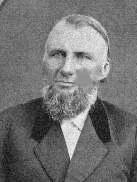
Josiah Kelly (J. K.) Alwood (1828–1909) was a prominent minister and influential leader in the United Brethren in Christ Church during the 19th century. Born in Harrison County, Ohio, Alwood embodied the rugged spiritual tradition of the American frontier. Ordained as a minister, he spent much of his early career as a circuit rider, a role that required him to travel vast distances on horseback to reach remote settlements and small congregations. These journeys often kept him away from his family for weeks as he conducted revival meetings and lectured on Christian doctrine across the North Ohio Conference.
As his career progressed, Alwood rose to the position of presiding elder and became a significant voice in the denominational politics of the United Brethren. He was a fierce defender of the church's original constitution and was deeply involved in the theological debates that eventually led to a major schism. During the General Conference of 1889 in York, Pennsylvania, Alwood served as a delegate during the formal separation of the church into two distinct groups. He remained a leader in the "Old Constitution" branch, dedicated to preserving the traditional tenets and governance of his faith.
In the world of hymnody, Alwood is best remembered for writing the text and music to the enduring gospel song "The Unclouded Day" (1879). Legend suggests he composed the song after witnessing a remarkably beautiful sunset that reminded him of the "land of an unclouded day" described in the Book of Revelation. The song, with its distinctive folk-like melody and hopeful imagery of a "home where no storm-clouds rise," became a staple of camp meetings and has been recorded by numerous artists in the bluegrass and country-gospel genres.
Alwood's dual legacy as a principled church administrator and a gifted songwriter highlights the unique character of 19th-century American evangelicalism, where rigorous doctrinal stands often coexisted with deep, poetic expressions of faith. He spent his final years in Morenci, Michigan, where he passed away in 1909. He is remembered not only for his steadfast leadership during a turbulent era of church history but also for providing the church with one of its most vivid and beloved musical visions of heaven.