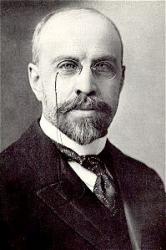
About James M. Gray
James Martin Gray (1851–1935) was a cornerstone of the American fundamentalist movement, serving as a pastor, scholar, and the long-time leader of the Moody Bible Institute. Born in New York City, Gray’s career spanned a period of intense theological debate in America. He moved from a successful 14-year pastorate at the First Reformed Episcopal Church in Boston to Chicago, where he eventually succeeded R.A. Torrey as the head of Moody, serving as Dean and later President.
Leadership and the Scofield Bible
Gray was one of the most respected conservative theologians of his time. His scholarly reputation was so significant that he was chosen as one of the seven editors of the Scofield Reference Bible, a publication that fundamentally shaped the "dispensationalist" understanding of Scripture for millions of Christians in the 20th century. Under his leadership, the Moody Bible Institute grew into a global powerhouse for missionary training and evangelical publishing.
Hymnody and "The Voice of Thanksgiving"
Despite his heavy administrative and academic duties, Gray was a prolific hymn writer and editor. He directed the publication of the Voice of Thanksgiving, the official hymnal of the Moody Bible Institute. His hymns are characterized by "Scriptural literalism"—a focus on using precise biblical language and doctrine.
-
"Only a Sinner": Perhaps his most famous hymn, written in 1905 with music by Daniel B. Towner. It reflected Gray's own conversion experience at age 22, emphasizing that salvation is entirely a matter of grace.
-
"He Who Confesseth His Sin": A hymn of repentance that demonstrates his pastoral concern for personal holiness and the biblical mechanics of forgiveness.
-
"What Did He Do?": A rhythmic gospel song that asks pointed questions about Christ’s sacrifice, designed for the mass revival meetings popularized by the Moody movement.
Civic Influence and Social Reform
Gray’s influence extended into the public square. Unlike some of his contemporaries who focused solely on the "afterlife," Gray was a staunch supporter of Prohibition and social betterment programs. He believed that a robust understanding of the Bible should lead to a more moral and patriotic society. He wrote over 20 books, ranging from technical Bible syntheses to practical guides for Sunday School teachers.
James M. Gray passed away in 1935, leaving a legacy as a "scholar of the people." He successfully bridged the gap between the ivory tower of theology and the pews of the local church. He is remembered as a man who could edit a complex reference Bible one day and write a simple, heart-felt hymn the next, ensuring that the "Moody tradition" of deep study and joyful singing remained united.