About James Rowe
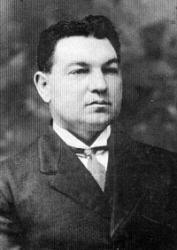
James Rowe (1865–1933) was an incredibly prolific English-American hymn writer whose output is estimated at over 9,000 published works. Born in Devon, England, he spent several years working in the Government Survey Office in Dublin before emigrating to the United States at age 25. His American life was remarkably varied; he spent a decade working for the New York Central Railroad and later served as the superintendent of a humane society in New York. However, it was his transition into the gospel music industry that defined his legacy, as he became one of the most sought-after lyricists for the leading gospel composers of his day.
Rowe began writing hymns around 1896 and quickly developed a reputation for his ability to craft relatable, emotionally resonant verses. He worked closely with famous composers such as Howard Doane, Charles Gabriel, and B.D. Ackley. His most enduring contribution to the church is the hymn "Love Lifted Me," written in 1912 with music by Howard E. Smith. The song, which uses the vivid imagery of a person sinking in the sea only to be rescued by divine love, became a cornerstone of the revival movement and remains a staple in evangelical hymnals worldwide.
His work often explored themes of transformation and personal testimony. Another of his famous hymns, "I Would Be Like Jesus," reflects the aspirational piety common in the early 20th century. Rowe had a unique talent for writing lyrics that were simple enough for Sunday school children yet profound enough for congregational worship. His productivity was so immense that he occasionally used the pseudonym James S. Apple to manage his vast output across various publishers and songbooks.
Rowe’s legacy is that of a "poet for the people." He moved from the technical world of surveying and the industrial world of railroads to the spiritual world of hymnody, providing a soundtrack for the Great Awakening era in America. Even after his death in 1933, his songs continued to circulate globally, proving that his verses possessed a timeless quality that transcended the specific revivalist context in which they were born. His ability to distill complex theological ideas into catchy, rhythmic poetry helped shape the sound of modern gospel music.