About Jean Ingelow
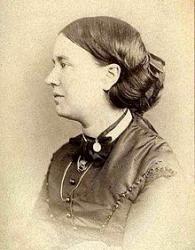
Jean Ingelow (1820–1897)
Jean Ingelow was a celebrated English poet and author of the nineteenth century whose literary gifts earned wide popularity in Britain and beyond. Though not primarily known as a hymn writer, portions of her devotional poetry found their way into hymnals, where her thoughtful expressions of Christian truth continued to bless worshippers.
She was born on March 17, 1820, in Boston, the daughter of William Ingelow. She rose to prominence during the Victorian era as one of England’s most widely read female poets.
Ingelow’s writings were admired for emotional depth, graceful language, and reflective treatment of life, faith, suffering, and hope. Her literary works include Poems, which greatly increased her reputation, and A Story of Doom and Other Poems. She also wrote fiction, including the beloved children’s fantasy Mopsa the Fairy.
Among her most popular poems was “O Fair Dove, O Fond Dove,” a work that reflected the lyrical charm for which she became known.
Though chiefly a literary poet, Ingelow also contributed indirectly to hymnody. From her Poems (1863), a cento beginning “And didst Thou love the race that loved not Thee” was adapted for use in the Congregational Church Hymnal. This text meditated on the love of Christ toward sinful humanity, showing how her poetry could be shaped into congregational devotion.
Her writings often carried moral seriousness and spiritual sensitivity, qualities that made some of her verse suitable for Christian worship and meditation.
Jean Ingelow died on July 20, 1897, in Kensington and was buried in Brompton Cemetery.
Her legacy remains that of a gifted Victorian poet whose words blended beauty, tenderness, and reflection, and whose influence reached even into the hymnbooks of the church