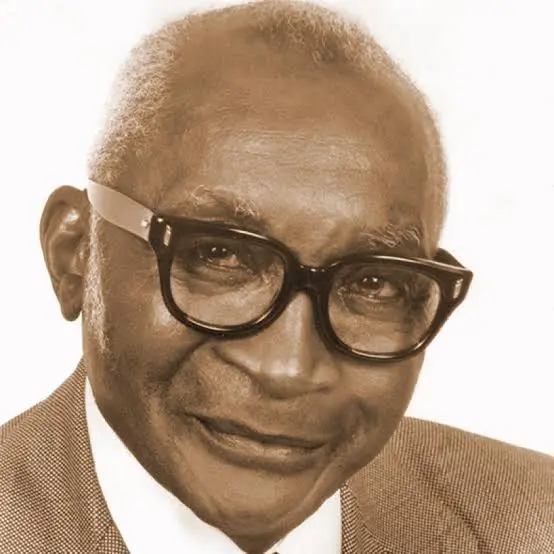
About Jester Hairston
Jester Joseph Hairston (1901–2000) was a monumental figure in 20th-century American music, celebrated as a composer, conductor, arranger, and actor. Born in Belews Creek, North Carolina, and raised in Homestead, Pennsylvania, Hairston was a grandson of enslaved people. He dedicated much of his life to the preservation and global promotion of the African American spiritual, transforming it from a folk tradition into a sophisticated choral art form. He was educated at Tufts University and the Juilliard School, where he honed the technical skills that would make him a master of choral arrangement.
Hairston is perhaps best known to the general public for his original composition "Mary's Boy Child." Written in 1956, the song was initially intended for his choir but became a global sensation after being recorded by Harry Belafonte. While many assume it is a traditional spiritual, it is an original work that perfectly captures the rhythmic and melodic essence of a West Indian calypso. Its success made Hairston one of the few Black composers of his era to have a Christmas song become a standard in the international holiday repertoire.
Beyond his songwriting, Hairston was a pioneer in the film and television industry. He moved to Los Angeles in the 1930s to work with Hall Johnson, a renowned choral director, and eventually became a go-to vocal coach and arranger for major Hollywood studios. He was responsible for the choral arrangements in classic films like Lilies of the Field, where he also dubbed the singing voice for Sidney Poitier in the song "Amen." Later in life, he achieved a new wave of fame as an actor, most notably playing the character "Rollie Forbes" on the 1980s sitcom Amen.
Throughout his long career, Hairston traveled the world as a cultural ambassador for the U.S. State Department, conducting choirs in Europe, Africa, and Asia. He was a staunch advocate for the "authentic" performance of spirituals, insisting that they be sung with the correct dialect and emotional intensity to honor their historical roots. He famously stated that these songs were the "only true American folk music," and he worked tirelessly to ensure they were respected as high art rather than mere novelty.
Jester Hairston passed away in 2000 at the age of 98. He left behind a legacy that bridged the gap between the plantation songs of his ancestors and the modern stages of Hollywood and Broadway. His work ensured that the spiritual, with its themes of hope, resilience, and liberation, would continue to be sung by people of all races and backgrounds. He remains a towering figure in the history of American music, remembered for his infectious energy, his technical brilliance, and his deep devotion to the "songs of his people."