About Joachim Neander
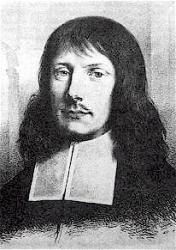
Joachim Neander (1650–1680) is widely regarded as the first major hymn writer of the German Reformed Church and remains one of the most beloved figures in Protestant hymnody. Born in Bremen into a family of educators—his grandfather had Grecized the family name "Neumann" to "Neander"—Joachim’s early life was marked by a period of youthful rebellion and "questionable pleasures" while a student. His life took a radical turn in 1670 when he attended a service at St. Martin’s Church intending to mock the Pietist pastor Theodore Under-Eyck, only to be deeply moved by the sermon. This conversion redirected his immense creative energy toward the service of God.
Conflict and the Neanderthal
In 1674, Neander was appointed Rector of the Latin School in Düsseldorf. His tenure there was marked by professional conflict; his fervent Pietist convictions led him to hold unauthorized prayer meetings and skip Holy Communion with those he deemed "unconverted." These actions resulted in a brief suspension from his duties in 1677.
During this period of professional isolation, Neander found solace in the rugged beauty of the valley of the Düssel river. He spent so much time wandering and composing hymns among its high cliffs and caves that the area was eventually named the Neanderthal (Neander’s Valley) in his honor. Ironically, this valley later became world-famous as the site where the first Neanderthal fossils were discovered in 1856.
The "A und Ώ" Collection
In 1680, the year of his untimely death from tuberculosis at age 30, Neander published his seminal work, Glaub- und Liebesübung (Exercise of Faith and Love). This collection of 57 hymns was unique for its "Covenant Theology" and its vivid, appreciative imagery of the natural world. Neander was also a gifted musician, providing 19 original melodies for his texts, many of which are still sung today.
Most Enduring Hymns
Neander’s hymns are characterized by a jubilant, "lyric fire" and a mastery of complex rhythmic forms. His most famous contributions to the English-speaking world include:
-
"Praise to the Lord, the Almighty" (Lobe den Herren): Often called the "King of Hymns," this majestic anthem of thanksgiving is based on Psalms 103 and 150. It remains a standard for festivals and weddings globally.
-
"All My Hope on God is Founded" (Meine Hoffnung stehet feste): A robust declaration of trust in God’s permanence over the "pride of man" and "earthly glory."
-
"Wonderful King Almighty" (Wunderbarer König): A hymn of adoration that Neander set to his own soaring melody (often called Groningen).
-
"Heaven and Earth, and Sea and Air" (Himmel, Erde, Luft und Meer): One of the earliest examples of a hymn specifically celebrating God’s majesty revealed through the "wonders" of nature.
Legacy of a "Sanctified Heart"
Though his life was cut short at just 30 years old, Neander’s influence was immediate and lasting. He bridged the gap between the rigid orthodoxy of the early Reformed Church and the deeply personal, "heart-religion" of Pietism. His hymns moved from the private meetings of his friends into the official liturgies of the Lutheran and Reformed churches with remarkable speed. He is remembered as a man of "firm faith and genuine lyric character" who saw the presence of the Creator in every cliff, brook, and rock of the German landscape.