About Johann Franck
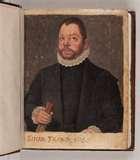
Johann Franck (1618–1677) was a towering figure in 17th-century German literature and hymnody, recognized as the most significant poet of his era after Paul Gerhardt. Born in Guben, Brandenburg, his life was deeply shaped by the Thirty Years' War. He studied law at the University of Königsberg—the only German university to remain relatively undisturbed by the conflict—where he formed lifelong friendships with influential poets like Simon Dach. Returning to Guben in 1640 to support his mother during the Swedish and Saxon occupations, Franck eventually rose through the ranks of civil service to become the town's mayor (Burgomaster) and a deputy to the regional Diet.
The Transition to "Personal" Hymnody
While Franck began his literary career writing secular poetry, he is best remembered for his 110 hymns. These works represent a pivotal shift in German hymnody; they moved away from the objective, "we-centered" congregational style of the Reformation toward a more subjective, "I-centered" individual tone. His lyrics often expressed a mystical longing for a direct, inward union between the soul and Christ. This transition laid the groundwork for the later Pietist movement.
Collaboration with Johann Crüger
Franck’s hymns reached the public largely through his close partnership with the renowned composer Johann Crüger. Many of Franck's finest texts were first published in Crüger's Praxis Pietatis Melica, the most influential German hymnal of the century. Crüger’s melodies provided the perfect musical vehicle for Franck’s "noble, pithy simplicity."
Core Hymns in the English Tradition
Several of Franck’s hymns have become cornerstones of international worship, largely due to the 19th-century translations by Catherine Winkworth:
-
"Jesu, Joy of Man's Desiring" (Jesu, meine Freude): Perhaps his most famous work, this hymn serves as a tender, deeply personal address to Jesus as the soul's greatest treasure. It famously served as the basis for a masterpiece by J.S. Bach.
-
"Deck Thyself, My Soul, with Gladness" (Schmücke dich, o liebe Seele): Considered one of the finest Eucharistic hymns ever written, it describes the soul preparing itself for the "heavenly banquet" of Holy Communion.
-
"Lord God, We Worship Thee" (Herr Gott dich loben wir, Regier): Written as a jubilant thanksgiving following the Peace of Westphalia in 1648, which finally ended the Thirty Years' War.
-
"Lord, to Thee I Make Confession" (Herr ich habe missgehandelt): A profound hymn of penitence that focuses on the mercy of God in the face of human failure.
Johann Franck passed away in 1677 in Guben, where he had spent the majority of his life in service to both his community and his faith. On the bicentenary of his death, a monument was placed on the wall of the Guben Stadtkirche to honor the man who gave the church a new, more intimate language for its devotion. His legacy endures every time a congregation sings of the soul’s "longing after eternal life."