About Robert Harkness
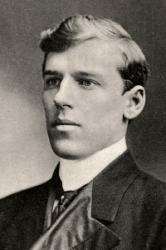
Robert Harkness (1880–1961) was a brilliant Australian-born pianist, composer, and educator who became one of the most influential figures in early 20th-century global evangelism. Possessing a uniquely rhythmic, orchestral approach to the keyboard, Harkness single-handedly revolutionized gospel music accompaniment, transitioning the church away from stiff, traditional organ styles into a vibrant, improvisational piano technique.
The Musician on a Bicycle
Born in Bendigo, Victoria, Australia, Harkness was already a highly accomplished classical pianist when the famous American evangelist Reuben A. Torrey and song leader Charles M. Alexander brought their revival campaign to Australia in 1902. Recognizing his immense talent, Alexander hired the young agnostic musician to serve as the tour's campaign pianist.
Harkness's conversion to Christianity was highly unconventional. While traveling between revival meetings on his bicycle, deep in thought about the messages he had been accompanying, he experienced a profound spiritual awakening. He pulled his bicycle to the side of the road, surrendered his life to Christ, and instantly dedicated his musical mastery to Christian service.
Traveling the Globe
Harkness joined Torrey and Alexander on multiple massive, multi-year tours around the world, playing before tens of thousands in the United States, Great Britain, Europe, and Asia.
Because early 20th-century mass revivals were held in cavernous exhibition halls or large tents without modern amplification, traditional organ music often sounded muddy and lacked momentum. Harkness developed a highly distinct "evangelistic style" characterized by:
-
Octave Reinforcements: Powerful bass octaves that could be heard at the back of a stadium.
-
Arpeggiated Fills: Rapid, cascading broken chords filling the spaces between vocal phrases.
-
Rhythmic Momentum: Injecting steady, uplifting tempos that kept massive crowds singing in perfect unison.
Pioneer of Correspondence Education
As the popularity of his style exploded, church pianists worldwide desperately wanted to replicate his sound. In response, Harkness founded the Harkness Correspondence School of Church Music.
He authored the world’s first systematic, step-by-step correspondence courses in gospel hymn playing. Through these mailed lessons, he taught tens of thousands of local church musicians how to take a simple, basic four-part hymnal layout and expand it into a rich, full, improvisational piano score. Later in life, he continued this educational mission through his acclaimed sacred music program, The Music of the Cross.
A Prolific Composer
Over his lifetime, Harkness composed more than 2,000 gospel songs and hymns, frequently writing both the words and the music. His melodies were designed to be instantly memorable, emotionally direct, and perfectly tailored for group singing.
Some of his most famous enduring compositions include:
-
"No Burdens Yonder" – A comforting song of heavenly hope.
-
"Shadows" – A deeply personal hymn written during a time of reflection.
-
"Sometime" (1922) – A classic piece reflecting on the eventual resolution of earthly sorrows.
-
"When We See Christ" – A triumphant anthem focusing on the culmination of the Christian journey.
Harkness eventually settled in the United States, passing away in California in 1961. Through his massive library of songs and his pioneering instructional methods, he fundamentally shaped the soundscape of modern evangelical church music.