About Sarah J. Hale
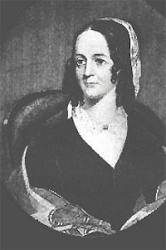
Sarah Josepha Buell Hale (1788–1879) was a towering figure in nineteenth-century American letters, an influential editor, a pioneering advocate for women's education, and a writer whose cultural legacy reshaped American life. Born in Newport, New Hampshire, on October 24, 1788, she received an informal but rigorous education from her mother and brother. In 1813, she married David Hale, a prominent lawyer with whom she shared a deep intellectual bond. Tragically, David died in 1822, leaving her a pregnant widow with five children. Turning to her pen for financial survival, Hale embarked on a literary career that would establish her as one of the most powerful tastemakers in antebellum America.
In 1828, Hale moved to Boston to become the editor of The Ladies' Magazine, the first journal in America edited by a woman and dedicated strictly to women's literature. In 1837, the publication merged with Louis A. Godey's literary venture in Philadelphia to create Godey's Lady's Book. As its literary editor for forty years, Hale built the magazine into an absolute cultural powerhouse, achieving an unprecedented national circulation of over 150,000 subscribers. She utilized her editorial platform to champion critical social causes, including the professionalization of women teachers, the funding of the Bunker Hill Monument, and the preservation of George Washington’s Mount Vernon estate. Notably, after a relentless, decades-long letter-writing campaign to multiple U.S. presidents, Hale successfully persuaded President Abraham Lincoln in 1863 to officially declare Thanksgiving a national holiday.
A devout member of the Protestant Episcopal Church, Hale occasionally channeled her literary talents into religious poetry and hymnody. Her most notable contribution to church music was her elegant, metrical paraphrase of the Lord's Prayer, "Our Father in heaven, we hallow Thy name." Written in two stanzas of eight lines each, the piece was published in Lowell Mason and David Greene's influential Church Psalmody (1831).
Despite her impressive journalistic feats and sacred verse, Hale's most ubiquitous and immortal contribution to global folklore is a simple poem she wrote for children. First published in her 1830 volume Poems for Our Children, "Mary's Lamb", universally known today as "Mary Had a Little Lamb" grew to become the most recognized nursery rhyme in the English language. Decades later, in 1877, its opening lines achieved an additional historical milestone when Thomas Edison spoke them into his newly invented phonograph, making Hale's verses the very first human words ever successfully recorded and played back in audio history.
Hale retired from editing in 1877 at the advanced age of eighty-nine and passed away in Philadelphia on April 30, 1879. Combining sharp editorial brilliance with a quiet, lifelong faith, she left behind a profound blueprint for the advancement of American women and a handful of verses woven permanently into the fabric of daily life.