About Sidney Lanier
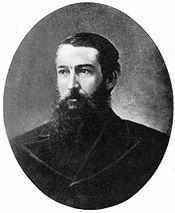
Sidney Lanier (1842–1881) was a highly celebrated nineteenth-century American poet, musician, and literary critic whose complex, musically structured verses earned him a lasting reputation as one of the premier southern literary voices of the post-Civil War era. Born in Macon, Georgia, on February 3, 1842, Lanier displayed an extraordinary, precocious talent for music from early childhood, mastering the flute, violin, and guitar with minimal instruction. He received his higher education at Oglethorpe College, graduating at the top of his class in 1860 with ambitions of pursuing an academic life.
However, the outbreak of the American Civil War abruptly shifted his trajectory. Lanier volunteered for the Confederate Army, serving in the signal corps and later as a pilot on a blockade runner. In 1864, his vessel was captured by Union forces, and he was incarcerated at a military prison in Point Lookout, Maryland. The brutal, unsanitary conditions of the prison permanently broke his health; he contracted tuberculosis, a grueling disease that would physically plague him for the rest of his life.
Following the war, Lanier abandoned a brief foray into law to devote his remaining energy to the arts. He achieved professional musical acclaim as the first flutist for the prestigious Peabody Symphony Orchestra in Baltimore, Maryland, and spent his final years lecturing in English literature at Johns Hopkins University. He passed away from complications of tuberculosis at the young age of thirty-nine on September 7, 1881, in Lynn, North Carolina. His collective poetic works were lovingly gathered and published posthumously by his widow in 1884.
Lanier's spiritual journey was complex. Raised a devout member of the Presbyterian Church, his adult years saw a gradual drift away from rigid, organized denominationalism toward a deeply mystical, transcendent view of God deeply tied to the natural world. Consequently, he rarely set out to write traditional, structured hymns for corporate church pews. Instead, his verse treated words as musical notes—emphasizing acoustic rhythm, vowel sounds, and cadence.
Despite his unorthodox approach to hymnody, two specific pieces from his literary catalog crossed over powerfully into Protestant worship:
-
"Into the woods my Master went" – Originally written in 1880 as a standalone poem titled "A Ballad of Trees and the Master," this text stands as his supreme contribution to sacred song. The verse offers a strikingly intimate, haunting portrayal of Jesus in the Garden of Gethsemane, finding spiritual alignment and strength among the olives and grey-green leaves before resolutely walking out to face the trials of the crucifixion. Hymnologist Louis F. Benson noted it read more like an ethereal carol than a standard hymn, but its raw emotional depth made it a beloved fixture in major hymnals, notably appearing in the landmark 1905 Methodist Hymnal.
-
"Thou God, Whose high eternal love" – A dignified, deeply reverent poem composed in Macon in September 1865. Exploring themes of sacred companionship and divine blessing, the piece has occasionally been extracted from his posthumous volume to serve as a solemn hymn for Holy Matrimony.
Through these few deeply affecting devotional lines, Lanier's distinct musical genius successfully bridged the gap between transcendental American poetry and the solemn reflection of traditional Christian worship.