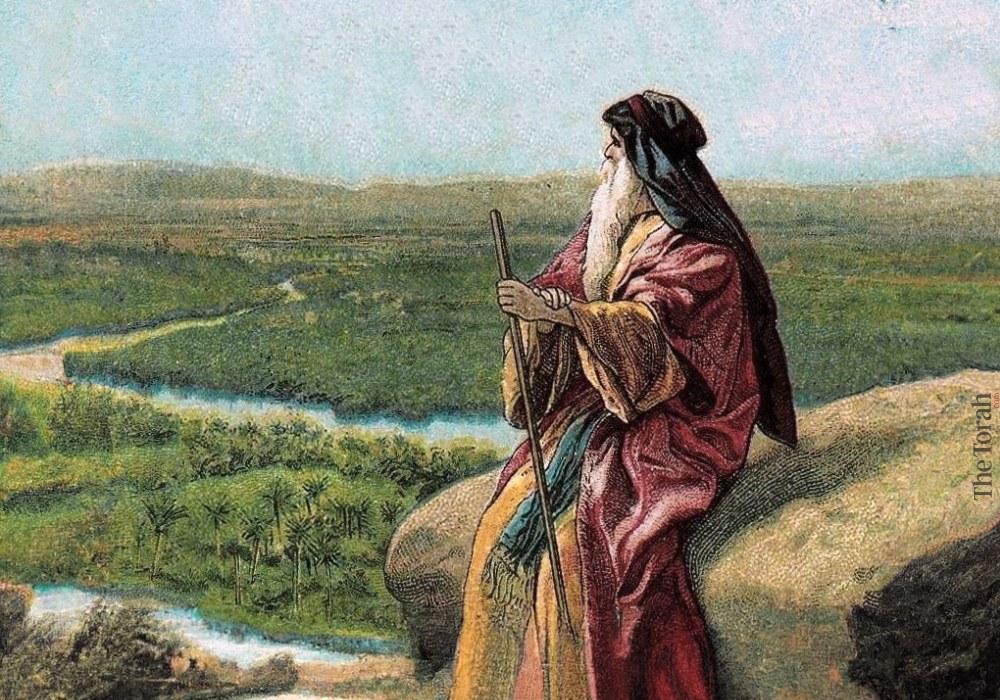
Why Moses Didn't Enter the Promised Land, But Eventually Did
Few stories in Scripture are as sad as that of Moses standing on the border of the Promised Land, seeing it with his own eyes, yet never entering it during his earthly life. After forty years of leading Israel through the wilderness, enduring their complaints, interceding for them before God, and faithfully delivering God's law, Moses was told that he would not cross the Jordan. At first glance, this appears to be a tragic ending to one of the greatest prophets who ever lived. Yet when we consider the whole testimony of Scripture, we discover that while Moses did not enter the earthly Promised Land under Joshua, he eventually stood in a far greater Promised Land, the kingdom and glory of God Himself. Please read to the end!
To understand why Moses was forbidden to enter Canaan, we must return to Israel's journey through the wilderness. Near the end of the forty years, the Israelites once again found themselves without water. Rather than trusting God, they murmured and complained against Moses and Aaron, accusing them of bringing the congregation into the wilderness to die. This was not the first time Israel had grumbled over water. Decades earlier, at Horeb, God had instructed Moses to strike a rock, and water flowed abundantly for the people (Exodus 17:1–7). This miracle demonstrated God's gracious provision despite Israel's unbelief.
However, in the later incident recorded in Numbers 20:1–13, God gave Moses different instructions. This time, He commanded Moses to speak to the rock, and it would yield water. Instead of obeying exactly as God had commanded, Moses, frustrated by the people's continual rebellion, gathered the congregation and declared, "Hear now, ye rebels; must we fetch you water out of this rock?" Then, rather than speaking to the rock, he struck it twice with his rod. Water indeed came forth, but Moses had failed to obey God's explicit command.
The Lord immediately pronounced His judgment:
"Because ye believed me not, to sanctify me in the eyes of the children of Israel, therefore ye shall not bring this congregation into the land which I have given them." (Numbers 20:12, KJV)
God's response may seem severe until we understand what Moses' actions represented. Moses was not merely a private individual; he was God's appointed leader, prophet, and representative before the nation. The greater the privilege, the greater the responsibility. Those entrusted with much are held to a higher standard. Moses' disobedience publicly misrepresented God's character before the people.
The Lord specifically said that Moses had failed "to sanctify" Him before Israel. To sanctify God means to treat Him as holy and to represent Him accurately. Moses spoke as though he and Aaron were the source of the miracle, "must we fetch you water?" instead of directing all glory to God. Furthermore, he displayed anger and impatience when God intended to demonstrate His gracious provision. Moses allowed his personal frustration to overshadow God's perfect holiness and mercy.
There was another profound lesson hidden within this event. The Apostle Paul teaches that the rock in the wilderness was a picture of Christ:
"For they drank of that spiritual Rock that followed them: and that Rock was Christ." (1 Corinthians 10:4, KJV)
The first striking of the rock symbolized Christ being smitten once for the sins of His people. The Lord Jesus suffered one sacrifice forever, never to be repeated. After His sacrifice, believers do not continually "strike" Christ again; instead, we come to Him by faith, asking and receiving His living water. By striking the rock a second time instead of speaking to it, Moses unintentionally distorted this beautiful picture of redemption. Although Moses may not have understood the full typology at the time, God certainly did.

The punishment also demonstrated that sincere service in the past does not excuse present disobedience. Moses had been remarkably faithful for decades. Scripture describes him as the meekest man on earth (Numbers 12:3). Through him God delivered Israel from Egypt, parted the Red Sea, received the Ten Commandments, and established the covenant at Sinai. Yet one act of disobedience in a critical moment brought serious consequences. This reminds us that God is impartial. He does not overlook sin because of someone's reputation, office, or years of faithful ministry.
The incident also highlights an important distinction between forgiveness and consequences. There is every indication that Moses remained God's beloved servant. God continued speaking with him. He continued leading Israel until the very end of his life. He wrote portions of Scripture after this event, blessed the tribes before his death, and remained a man of extraordinary faith. His fellowship with God continued, but one earthly privilege—the honor of leading Israel into Canaan, was permanently withheld.
Near the close of his life, Moses pleaded with the Lord to allow him to enter the land. In Deuteronomy 3:23–27, he earnestly begged God to let him cross the Jordan. The Lord refused. Instead, He instructed Moses to climb Mount Pisgah and view the land from afar. From that mountain he looked across the Jordan Valley and saw the inheritance that Israel would soon possess. Then, according to Deuteronomy 34, Moses died there, and God Himself buried His servant. No prophet in Israel ever arose like Moses, whom the Lord knew face to face.
At this point the story appears sorrowful. Moses never walked through Canaan. Joshua became the one who led Israel across the Jordan. Yet Scripture does not end Moses' account there.
More than fourteen centuries later, something remarkable happened. The Lord Jesus ascended a high mountain with three of His disciples. There, before their eyes, Christ was transfigured. His face shone like the sun, and His garments became radiant with heavenly glory. Suddenly, two men appeared, speaking with Him. Those two men were Moses and Elijah (Matthew 17:1–8; Mark 9:2–8; Luke 9:28–36).
This event is deeply significant. Moses, who had once been barred from entering the earthly inheritance, now stood in the land itself, alive in glory speaking with the Messiah. Luke records that they discussed Christ's "decease" which He would accomplish at Jerusalem, referring to His coming death on the cross. The lawgiver stood beside the One who would perfectly fulfill the law. The servant who failed entered at last through God's grace.
In one sense, Moses finally stood in the Promised Land. Yet something even greater had happened. The earthly land of Canaan was never God's ultimate promise. Hebrews explains that even the patriarchs looked beyond an earthly inheritance. They desired "a better country, that is, a heavenly" (Hebrews 11:16, KJV). Moses himself esteemed "the reproach of Christ greater riches than the treasures in Egypt," looking ahead to God's eternal reward (Hebrews 11:26).
The book of Hebrews further teaches that Joshua's conquest did not provide the ultimate rest of God (Hebrews 4:8–9). Canaan pointed forward to something far greater, the eternal kingdom secured through Jesus Christ. Moses missed the temporary inheritance because of sin, but through faith he inherited the everlasting one.
This truth teaches several vital lessons for Christians today.
First, God takes obedience seriously. Even leaders whom He greatly uses must submit carefully to His Word. Partial obedience is still disobedience. Good intentions cannot replace faithful submission to God's commands.
Second, believers may experience temporal consequences for sin even after receiving God's forgiveness. David was forgiven after his sin with Bathsheba, yet painful consequences remained. Likewise, Moses was forgiven and remained God's servant, but he still lost the privilege of entering Canaan. God's fatherly discipline is part of His love for His children.
Third, earthly disappointments are not the end of God's story. Moses lost something precious, yet he gained something infinitely better. Many Christians experience unanswered prayers, closed doors, broken plans, and opportunities that never materialize. Yet God often withholds lesser blessings because He has prepared greater ones beyond our present understanding.
Finally, Moses' story points us directly to Jesus Christ. Moses, the great lawgiver, could lead Israel only to the border of the inheritance. He could not bring them in. Joshua, whose Hebrew name, Yehoshua, corresponds to the name Jesus, led God's people into the land. This beautifully illustrates the gospel. The law exposes sin and brings us to the edge of God's promises, but only Jesus Christ can bring us into our eternal inheritance through His perfect life, death, and resurrection.
The final picture of Moses is therefore not one of failure but of triumph. He stands in glory beside Christ, no longer a weary pilgrim in the wilderness but a redeemed saint enjoying the presence of God. Though he did not enter the earthly Promised Land in his lifetime, he entered the heavenly inheritance prepared for all who trust in the Lord. His life reminds us that God's discipline is real, His holiness is perfect, His grace is abundant, and His eternal promises far surpass every earthly blessing. The Promised Land of Canaan was temporary, but the inheritance secured through Christ is everlasting. Moses lost one, but by God's grace, he received the other forever.




No comments yet. Be the first to share your thoughts!