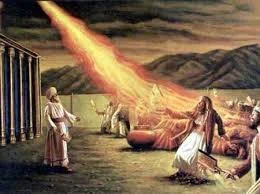
Why Were Nadab and Abihu Destroyed by Fire Before the LORD?
Two priests, sons of Aaron, enter the tabernacle and are instantly consumed by fire from the presence of God. The text is brief, but the implications are profound. “And there went out fire from the LORD, and devoured them, and they died before the LORD” (Leviticus 10:2, KJV).
To understand why Nadab and Abihu died, we must consider the holiness of God, the seriousness of worship, and the danger of approaching God on human terms rather than God’s terms.
Nadab and Abihu Were Priests with Privilege and Responsibility
Nadab and Abihu were not outsiders or pagans. They were priests, consecrated for sacred service, and sons of Aaron the high priest (Exodus 6:23). They had witnessed God’s glory firsthand. Scripture records that they were among those who saw a manifestation of God’s presence on Mount Sinai (Exodus 24:9–11).
This makes their sin more serious, not less. Scripture teaches that greater knowledge brings greater accountability. “Unto whomsoever much is given, of him shall be much required” (Luke 12:48). Nadab and Abihu knew God’s holiness and still chose to disregard His command.
They Offered “Strange Fire” Contrary to God’s Command
Leviticus 10:1 states, “They offered strange fire before the LORD, which he commanded them not.” The phrase “strange fire” refers to unauthorized fire, meaning worship that God had not prescribed.
God had given explicit instructions for how sacrifices were to be offered and how fire was to be used in the tabernacle (Exodus 30:9; Leviticus 16:12). Worship was not to be creative, spontaneous, or pragmatic. It was to be obedient. “What thing soever I command you, observe to do it: thou shalt not add thereto, nor diminish from it” (Deuteronomy 12:32).
Their sin was not innovation in style. It was disobedience in worship.
Worship Must Be According to God’s Holiness, Not Human Preference
God’s response reveals the heart of the issue. Moses said to Aaron, “This is it that the LORD spake, saying, I will be sanctified in them that come nigh me, and before all the people I will be glorified” (Leviticus 10:3).
This statement explains the judgment. God demands to be treated as holy by those who approach Him. Worship that ignores God’s revealed will dishonors His holiness. Nadab and Abihu treated worship casually, as something to be shaped by personal judgment rather than divine command.
The Bible repeatedly warns against self-designed worship. “In vain they do worship me, teaching for doctrines the commandments of men” (Matthew 15:9). God desires obedience, not innovation divorced from truth.
There Is Evidence of Irreverence and Possibly Intoxication
Later in the chapter, God commands Aaron and the priests not to drink wine or strong drink when entering the tabernacle (Leviticus 10:8–11). This command comes immediately after the death of Nadab and Abihu, strongly suggesting that their judgment may have been connected to impaired reverence or self-control.
Scripture consistently teaches that those who serve before the Lord must do so with sobriety and discernment. “Be sober, be vigilant” (1 Peter 5:8). Whether intoxication was involved or not, the text makes clear that carelessness in worship is unacceptable to God.
God’s Judgment Protected the Holiness of Worship
This event occurred at a critical moment. The tabernacle had just been inaugurated, sacrifices had been accepted, and God’s glory had appeared visibly to the people (Leviticus 9:23–24). At such moments in redemptive history, God often acts decisively to establish the seriousness of His holiness.
Similar judgments occur at other pivotal points, such as with Uzzah (2 Samuel 6:7) and Ananias and Sapphira (Acts 5:1–11). These events remind God’s people that His presence is not to be treated lightly. “Our God is a consuming fire” (Hebrews 12:29).
God’s Justice Was Not Cruel, but Righteous
Some view this judgment as excessive. Scripture does not. God had clearly revealed His will. Nadab and Abihu disregarded it. Their death was not an emotional reaction by God, but a righteous judgment. “The judgments of the LORD are true and righteous altogether” (Psalm 19:9).
God’s holiness is not negotiable. The closer one draws to Him, the greater the responsibility to honor Him rightly. “Who shall stand in his holy place? He that hath clean hands, and a pure heart” (Psalm 24:3–4).
The Silence of Aaron Reveals Acceptance of God’s Justice
After Moses spoke, Scripture records, “And Aaron held his peace” (Leviticus 10:3). This silence is significant. Aaron did not protest or accuse God of injustice. He recognized that God was right.
This moment teaches that reverence for God includes submission to His judgments, even when they are painful. “Be still, and know that I am God” (Psalm 46:10).
The New Testament Connection
The New Testament does not lower God’s standard for worship. Instead, it deepens it. Believers are now the temple of the Holy Spirit (1 Corinthians 6:19). We are commanded to worship God “in spirit and in truth” (John 4:24).
Grace does not remove reverence. “Let us have grace, whereby we may serve God acceptably with reverence and godly fear” (Hebrews 12:28). Nadab and Abihu’s account warns believers that sincerity without obedience is not acceptable worship.
Nadab and Abihu were destroyed because they approached God on their own terms, offered unauthorized worship, and failed to honor His holiness. Their judgment teaches that God defines how He is to be worshiped, and that those who serve Him must do so with obedience, reverence, and fear.
This passage calls us to examine their worship. God is gracious, but He is also holy. True worship is not about creativity or convenience. It is about submission to God’s revealed will and reverence for His holy presence.





No comments yet. Be the first to share your thoughts!