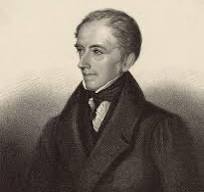
About James Montgomery
James Montgomery (1771–1854) was a preeminent Scottish-born poet, editor, and social reformer whose life and work represented a unique fusion of Moravian piety and radical political activism. Born in Irvine, Ayrshire, to missionary parents who died in the West Indies while he was still a young student, Montgomery was shaped by a childhood of both spiritual depth and profound loss. He eventually settled in Sheffield, England, where he became the influential editor of the Sheffield Iris. His editorial career was marked by a fierce independence of mind; he was twice imprisoned in York Castle for his political stances, once for reprinting a song celebrating the fall of the Bastille and once for his reporting on a local riot that reflected poorly on the military.
Beyond the editor's desk, Montgomery was a tireless advocate for the marginalized, using his literary platform to champion social justice long before such causes were mainstream. He was a vocal opponent of the slave trade, a defender of the rights of chimney sweeps, specifically the young "climbing boys", and a critic of state-run lotteries which he believed exploited the poor. Despite his radical leanings in civic life, his religious views were characterized by a broad and charitable spirit. He maintained close ties with various Christian denominations and was a fervent supporter of the British and Foreign Bible Society and various foreign mission boards, carrying forward the missionary legacy of his parents.
As a hymn writer, Montgomery is frequently ranked alongside giants like Isaac Watts and Charles Wesley. He authored over 400 hymns, many of which are considered masterpieces of the English language due to their accurate rhythm, scriptural depth, and emotional sincerity. Among his most enduring contributions is the Christmas carol "Angels from the Realms of Glory," which first appeared in the Iris in 1816. Other seminal works include "Hail to the Lord's Anointed," a majestic metrical version of Psalm 72, and "Prayer is the Soul's Sincere Desire," which provides an evocative and accessible definition of the nature of communication with God. His Passion hymn, "Go to Dark Gethsemane," remains a cornerstone of Holy Week services worldwide.
The secret of Montgomery's lasting influence lay in his ability to combine high poetic genius with a "sanctified heart." His Moravian upbringing instilled in him a devotion that was "tender without sentimentality" and "dogmatic without uncharitableness." By the time of his death in 1854, he was so highly regarded that he was honored with a public funeral in Sheffield and a royal pension. He left behind a body of work that continues to provide the global church with a language of "lyric fire" and deep, scriptural devotion, ensuring that the voice of the "Sheffield Poet" remains a vital part of the Christian liturgical tradition.
From the Dictionary of Hymnology
Related terms and topics automatically matched to this author.
A children's temple here we build Hymn
James Montgomery's 1840 hymn written specifically for the opening of the first Sunday School building in Wincobank, Sheffield.
Read moreA sure and tried foundation stone Hymnology
A historical summary of James Montgomery's 1822 foundation stone hymn, detailing its composition for St. Philip's Church, Sheffield, and its subsequent eclipse by his own later work.
Read moreAgain our ears have heard the voice History
Hymnological profile of James Montgomery's nineteenth-century hymn for the close of Divine Service, "Again our ears have heard the voice."
Read more